

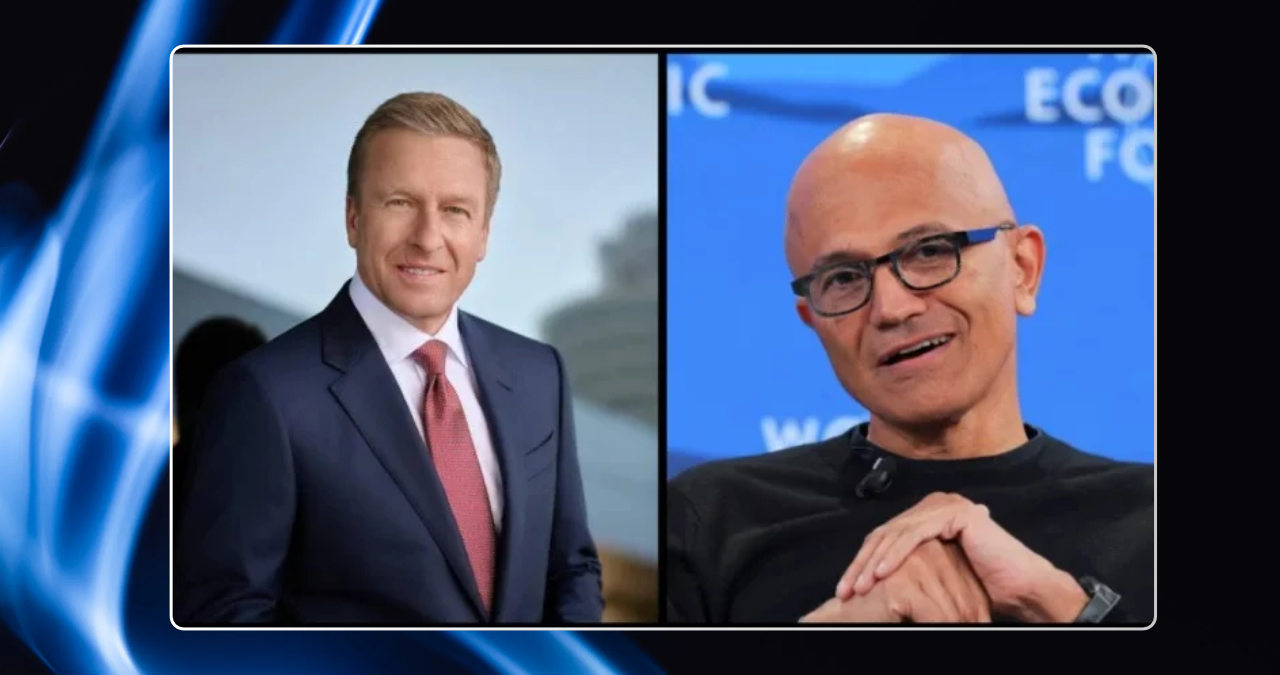
Oliver Zipse and Satya Nadella are two internationally recognised business executives who have influenced the automotive and technology industries. Oliver Zipse is known for his leadership at BMW, while Satya Nadella is recognised for transforming Microsoft through cloud computing, artificial intelligence, and software innovation.
Although they built their careers in different industries, both executives have focused on technological development, business transformation, and preparing established companies for changing market demands.
The connection between Oliver Zipse and Satya Nadella is particularly interesting because BMW and Microsoft have collaborated on smart manufacturing technologies. Their professional journeys also demonstrate how engineering, digital infrastructure, and innovation are becoming increasingly connected.
This article explores their backgrounds, education, careers, leadership achievements, professional connection, and influence on the future of business and technology.
Who Is Oliver Zipse?
Oliver Zipse is a German business executive best known for his leadership at BMW Group. He served as Chairman of the Board of Management from August 2019 until May 2026.
Born on 7 February 1964 in Heidelberg, Germany, Zipse developed an educational background in engineering, mathematics, and computer science.
His academic studies included computer science and mathematics at the University of Utah and mechanical engineering at the Technical University of Darmstadt. He also completed an Executive MBA programme involving WHU and the Kellogg School of Management.
His technical education provided a foundation for his career in automotive manufacturing, product development, and corporate management.
Unlike executives who move between several unrelated industries, Zipse spent most of his professional career at BMW. This experience gave him extensive knowledge of automotive production, engineering operations, and international business strategy.
Oliver Zipse’s Career at BMW
Oliver Zipse joined BMW in 1991 as a trainee in development and production. Over the years, he accepted several positions across the company’s technical and management divisions.
His career progression demonstrates how experience in different business departments can prepare professionals for senior leadership responsibilities.
Early career and professional development
During his early years at BMW, Zipse worked in areas connected to production and technical development.
Between 2007 and 2008, he served as managing director of BMW’s Oxford manufacturing plant in the United Kingdom.
This position gave him experience managing international manufacturing operations and understanding the challenges associated with automotive production.
He subsequently took on responsibilities involving corporate planning and product strategy.
Becoming chairman of BMW
In 2015, Zipse joined BMW’s Board of Management and became responsible for production.
Four years later, in August 2019, he became Chairman of the Board of Management.
His leadership period coincided with major changes in the automotive industry, including electric mobility, digital vehicle systems, environmental regulations, and competition from new automotive manufacturers.
BMW had to balance its traditional engineering strengths with the growing demand for electric vehicles and connected technologies.
BMW Neue Klasse
One of the major strategic developments associated with Zipse’s leadership was BMW’s Neue Klasse programme.
Neue Klasse represents a significant transformation in the company’s vehicle development strategy, with an emphasis on electric mobility, software architecture, digital functionality, and improved efficiency.
The programme illustrates how modern automotive companies must rethink vehicle engineering rather than simply replace petrol engines with electric motors.
It also demonstrates the increasing importance of software and digital systems in the customer experience.
Who Is Satya Nadella?
Satya Nadella is an Indian-born business executive who serves as Chairman and Chief Executive Officer of Microsoft. He is widely recognised for leading the company’s expansion in cloud computing, enterprise software, and artificial intelligence.
Born in Hyderabad, India, Nadella developed an early interest in engineering and technology. His educational background includes electrical engineering from Mangalore University, a master’s degree in computer science from the University of Wisconsin–Milwaukee, and an MBA from the University of Chicago.
Before joining Microsoft, he worked at Sun Microsystems. He joined Microsoft in 1992 and gradually moved into senior management positions.
His professional experience includes enterprise technology, online services, research and development, and cloud infrastructure.
In February 2014, Nadella became Microsoft’s CEO. His appointment marked an important period in the company’s development, particularly as Microsoft strengthened its cloud computing business and expanded its software services.
Satya Nadella’s Career and Achievements at Microsoft
Nadella’s career at Microsoft demonstrates how technical knowledge and business management can work together to transform a large organisation.
Before becoming CEO, he led Microsoft’s Cloud and Enterprise group. This position gave him significant experience in developing the company’s cloud infrastructure and enterprise services.
Microsoft’s cloud computing transformation
One of Nadella’s most recognised contributions has been strengthening Microsoft’s cloud strategy.
Microsoft Azure became a central part of the company’s enterprise technology business. Azure provides cloud infrastructure, computing resources, application development tools, databases, and artificial intelligence services.
Cloud computing allows organisations to access digital infrastructure without having to operate all their own physical servers.
For example, a business can use cloud services to store information, host applications, manage databases, and increase computing capacity when demand grows.
This approach has helped Microsoft compete in the global cloud computing market.
Artificial intelligence and Microsoft Copilot
Artificial intelligence has become another major area of Microsoft’s business strategy under Nadella.
Microsoft has expanded AI capabilities across its products and services, including Microsoft Copilot and Azure AI.
These technologies can assist users with writing, information analysis, software development, research, and workplace productivity.
The company’s approach involves integrating AI into familiar software environments rather than treating it as an entirely separate product category.
Changing Microsoft’s corporate culture
Nadella has also focused on organisational culture.
His leadership has encouraged collaboration, continuous learning, and a growth mindset.
These principles are particularly relevant to technology companies because software development and customer expectations change rapidly.
Microsoft’s transformation under his leadership demonstrates how established companies can adjust their priorities while maintaining their existing business strengths.
Oliver Zipse and Satya Nadella: Their Professional Connection
One of the most interesting aspects of Oliver Zipse and Satya Nadella’s professional backgrounds is the relationship between BMW and Microsoft.
Although the executives represent different industries, their companies have worked together on technologies designed to improve manufacturing and digital operations.
Their collaboration provides a practical example of how automotive engineering and software development can complement one another.
The Open Manufacturing Platform
In April 2019, BMW Group and Microsoft announced the Open Manufacturing Platform.
The initiative aimed to encourage collaboration between manufacturers and technology companies through industrial Internet of Things solutions.
The platform was designed to support connected factories, industrial data sharing, and the development of smart manufacturing applications.
It was built using Microsoft Azure industrial IoT technology.
For BMW, this approach offered opportunities to improve manufacturing operations through connected systems. For Microsoft, it demonstrated how cloud infrastructure could support complex industrial environments.
Why the partnership matters
Modern manufacturing facilities use machines, robots, sensors, and software systems to coordinate production.
However, different systems can sometimes operate independently, making it difficult to exchange information.
Industrial IoT technology can help connect these systems and make operational data more accessible.
For example, a manufacturing facility can use connected technology to:
- Monitor equipment performance.
- Identify production delays.
- Improve communication between machines.
- Analyse manufacturing information.
- Support predictive maintenance.
- Improve coordination across production facilities.
These applications demonstrate why technology partnerships have become increasingly important for traditional manufacturing companies.
Was there a direct personal relationship between the two executives?
The documented connection is primarily between BMW Group and Microsoft.
The companies announced their Open Manufacturing Platform collaboration, but this announcement does not establish that Zipse and Nadella personally negotiated the partnership or maintained a close personal relationship.
It is therefore more accurate to discuss their organisations’ professional collaboration than to describe them as personal business partners.
Oliver Zipse vs Satya Nadella: Leadership and Career Comparison
Oliver Zipse and Satya Nadella have different professional backgrounds, educational experiences, and management responsibilities.
However, both have worked in organisations where technology plays an increasingly important role in business development.
| Category | Oliver Zipse | Satya Nadella |
|---|---|---|
| National background | German | Indian-born |
| Industry | Automotive | Technology |
| Company | BMW Group | Microsoft |
| Leadership role | Former chairman | Chairman and CEO |
| Joined company | BMW in 1991 | Microsoft in 1992 |
| Educational background | Engineering, mathematics and computer science | Electrical engineering, computer science and business administration |
| Main business focus | Automotive production and mobility | Software, cloud computing and AI |
| Major initiative | BMW Neue Klasse | Microsoft Azure and AI expansion |
| Leadership period | BMW chairman, 2019–2026 | Microsoft CEO since 2014 |
Different approaches to business leadership
Zipse’s career was closely connected to engineering, manufacturing, and automotive operations.
His responsibilities involved managing complex production systems and preparing BMW for changes in the global automotive market.
Nadella’s career focused on software, cloud infrastructure, enterprise technology, and digital transformation.
His responsibilities involved developing technology platforms and adapting Microsoft’s products to changing customer requirements.
Their careers demonstrate that effective leadership depends on understanding the particular challenges of an industry.
How Their Work Influences the Future of Technology
The careers of Zipse and Nadella provide useful context for understanding several developments that are changing global industries.
Electric vehicles and connected mobility
Automotive manufacturers are increasingly investing in electric vehicles and digitally connected systems.
Modern vehicles depend on electronic control systems, software, battery management, connectivity, and advanced computing.
BMW’s Neue Klasse programme reflects this transformation.
The challenge for manufacturers is to combine vehicle performance, efficiency, digital functionality, safety, and customer expectations.
Artificial intelligence in manufacturing
Artificial intelligence can help manufacturers analyse operational data and identify patterns that may be difficult to detect manually.
For example, AI-supported systems can monitor machinery and identify unusual performance patterns.
This information can help maintenance teams investigate potential equipment problems before they cause major interruptions.
However, AI systems still require reliable data, suitable infrastructure, and human supervision.
Cloud computing and industrial operations
Cloud computing provides organisations with flexible access to computing power, storage, and software services.
Manufacturers can use cloud platforms to connect facilities, manage operational information, and support data analysis.
This becomes especially valuable for companies operating production facilities across several countries.
The BMW and Microsoft collaboration illustrates how cloud technology can support industrial digitalisation.
Sustainability and technological innovation
Sustainability is another important consideration for both industries.
Automotive manufacturers are working on electric mobility, energy efficiency, battery development, and more efficient production methods.
Technology companies face challenges involving data-centre energy consumption, computing efficiency, and the environmental impact of digital infrastructure.
Both industries must consider long-term resource management when developing new technologies.
What Happened to Oliver Zipse After Leaving BMW?
Oliver Zipse concluded his career at BMW in May 2026 after approximately 35 years with the company.
At BMW’s 106th Annual General Meeting on 13 May 2026, he handed over the chairmanship to Dr.-Ing. Milan Nedeljković, who assumed the position on 14 May 2026.
Zipse’s departure followed a planned leadership transition. His successor had previously served as BMW’s Board Member for Production.
His tenure as chairman included several important developments, including the company’s response to the COVID-19 pandemic, its electric vehicle strategy, and the Neue Klasse programme.
His departure marked the end of a significant chapter in BMW’s management history. BMW Group Newsroom+1
Satya Nadella’s Continuing Influence on the Technology Industry
Satya Nadella continues to lead Microsoft through a period of major technological development.
Artificial intelligence, cloud computing, cybersecurity, and enterprise software remain important areas of the company’s business strategy.
The importance of Microsoft Azure
Azure provides businesses with cloud infrastructure, application services, databases, and computing resources.
Organisations can use these services to develop applications, manage information, and support digital operations.
Its flexibility makes cloud computing relevant to companies across manufacturing, education, healthcare, finance, and retail.
The expansion of AI-powered productivity
AI-powered tools are changing how people complete everyday professional tasks.
Microsoft Copilot is designed to assist with activities such as writing, summarising information, analysing data, and creating content within supported software environments.
These tools can improve productivity, although users still need to review generated information for accuracy.
Challenges facing technology companies
Artificial intelligence also introduces important business and ethical challenges.
Companies must consider data privacy, cybersecurity, copyright, system reliability, and the responsible use of automated technology.
For Nadella and other technology executives, the challenge is to develop useful AI products while maintaining customer confidence and managing operational risks.
Important Business Lessons From Oliver Zipse and Satya Nadella
Their professional journeys offer several lessons for entrepreneurs, managers, and business professionals.
Technical knowledge can support leadership
Both executives developed strong technical foundations before reaching senior management positions.
Their careers demonstrate the value of understanding the products, services, and operations behind a business.
Technical knowledge can help leaders make better-informed decisions when evaluating new technologies and investment opportunities.
Long-term planning matters
Major business transformations rarely happen overnight.
BMW’s transition towards electric mobility requires investment in vehicle development, manufacturing, and software. Microsoft’s cloud and AI expansion similarly involves infrastructure, research, and product development.
Both examples highlight the importance of long-term planning.
Innovation must solve real problems
New technology should provide practical benefits.
A connected manufacturing system should improve production operations. An AI-powered software product should help users complete meaningful tasks.
Businesses need to evaluate whether innovation actually addresses customer or operational needs.
Collaboration creates new opportunities
The BMW and Microsoft partnership demonstrates the potential of cooperation between companies with different areas of expertise.
Automotive manufacturers understand industrial production, while technology companies provide software and cloud infrastructure.
Combining these capabilities can support solutions that benefit multiple industries.
Advantages and Limitations of Their Business Strategies
The technologies associated with their industries offer opportunities, but they also involve practical challenges.
| Technology or strategy | Potential benefits | Possible limitations |
|---|---|---|
| Electric vehicles | Reduced vehicle emissions during use | Battery costs and charging infrastructure |
| Cloud computing | Flexible computing and storage | Security and data-management challenges |
| Artificial intelligence | Productivity and automation | Accuracy and privacy concerns |
| Smart manufacturing | Better production monitoring | Implementation costs |
| Digital transformation | New business opportunities | Investment and employee training requirements |
Understanding these limitations is essential because adopting new technology does not automatically guarantee commercial success.
Businesses must consider their financial resources, workforce, infrastructure, and customer requirements before making major technological investments.
Frequently Asked Questions
1. Who are Oliver Zipse and Satya Nadella?
Oliver Zipse is a German business executive and former Chairman of BMW Group. Satya Nadella is an Indian-born business executive who serves as Microsoft’s Chairman and CEO.
2. Are Oliver Zipse and Satya Nadella business partners?
Their companies, BMW and Microsoft, have collaborated on smart manufacturing technologies. However, there is no established evidence that the two executives have a personal business partnership.
3. What is Oliver Zipse famous for?
Oliver Zipse is known for his 35-year career at BMW and his leadership as chairman from 2019 to 2026. His tenure included the development of the Neue Klasse programme and BMW’s response to the electric mobility transition.
4. What is Satya Nadella’s biggest contribution to Microsoft?
Nadella is particularly associated with Microsoft’s transformation towards cloud computing and enterprise services. He has also overseen the company’s expanding investment in artificial intelligence.
5. What is the BMW and Microsoft Open Manufacturing Platform?
It is an initiative announced in April 2019 to encourage the development of industrial Internet of Things technologies and smart manufacturing solutions using an open technology framework.
6. Who replaced Oliver Zipse at BMW?
Dr.-Ing. Milan Nedeljković succeeded Oliver Zipse as Chairman of BMW’s Board of Management on 14 May 2026.
7. When did Satya Nadella become Microsoft’s CEO?
Satya Nadella became Microsoft’s Chief Executive Officer in February 2014. He had joined the company in 1992.
8. What industries are influenced by their leadership?
Their professional work is relevant to automotive manufacturing, electric mobility, cloud computing, artificial intelligence, industrial automation, enterprise software, and digital transformation.
Conclusion
Oliver Zipse and Satya Nadella represent two different areas of modern business leadership. Zipse’s professional journey at BMW highlights the importance of automotive engineering, manufacturing expertise, and the transition towards electric mobility. Nadella’s career at Microsoft demonstrates how cloud computing, enterprise software, and artificial intelligence can reshape an established technology company.
Their organisations’ collaboration through the Open Manufacturing Platform provides a clear example of how the automotive and technology industries can work together.
Although their individual careers have followed different paths, both executives demonstrate the importance of adapting to technological change, investing in innovation, and developing long-term business strategies. Their professional experiences offer valuable lessons about the growing relationship between traditional manufacturing and the digital economy.
