

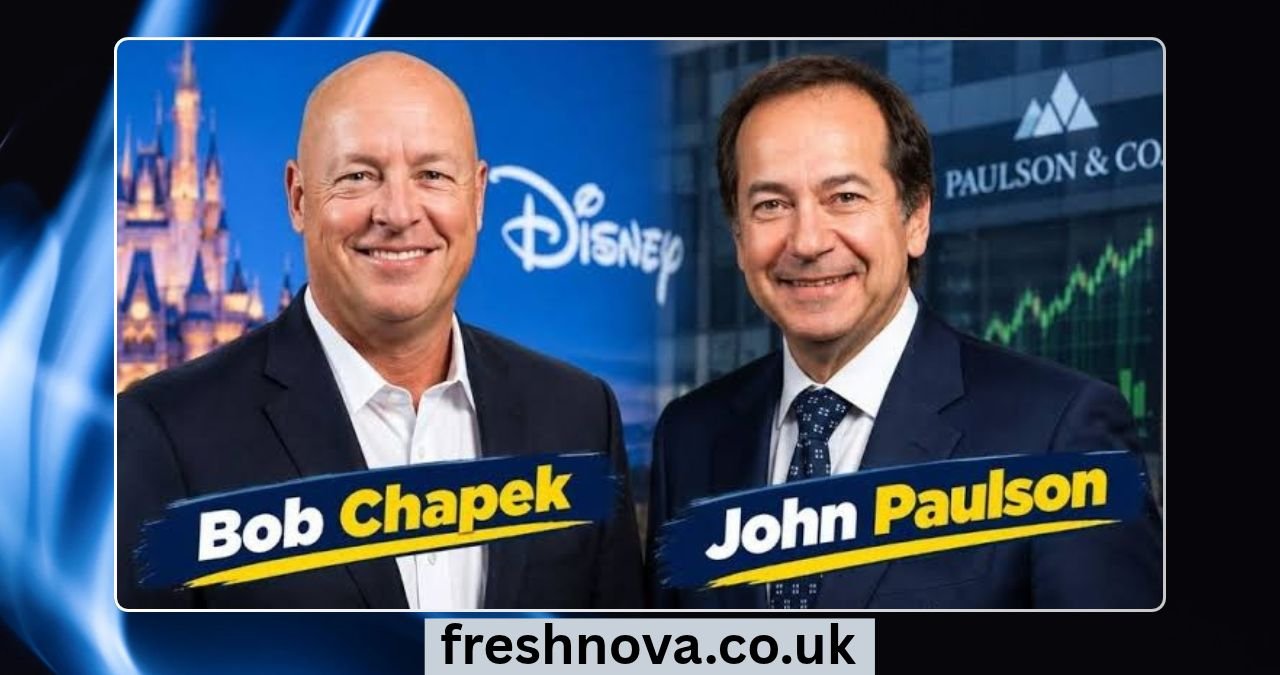
John Paulson is an American billionaire investor and hedge fund manager best known for his successful investment strategy during the United States housing market crisis of 2007–2008. He built his reputation through careful financial research, identifying opportunities that other investors overlooked and making major decisions based on market risks.
Early Life and Education
John Alfred Paulson was born on 14 December 1955 in Queens, New York. He developed an interest in business at an early age and demonstrated an entrepreneurial mindset while growing up.
He attended New York University, where he studied finance and graduated in 1978. He later enrolled at Harvard Business School, earning an MBA in 1980 as a Baker Scholar, an academic distinction awarded to high-performing students.
His education provided a foundation in financial analysis, business management and investment strategy. These skills became important throughout his professional career.
Career and Investment Success
Paulson began his professional journey at Boston Consulting Group before moving into investment banking and financial services. He worked at Odyssey Partners and Bear Stearns, where he gained experience in mergers and acquisitions.
He subsequently joined Gruss Partners, focusing on arbitrage and investment opportunities.
In 1994, Paulson established his own investment management firm, Paulson & Co. Initially, building the business was challenging because he had limited access to investors and needed to establish a reputation in a competitive financial industry.
Over time, the firm attracted significant investment capital and developed expertise in event-driven investing, merger arbitrage and credit markets.
The 2007 Housing Market Trade
One of the defining moments in John Paulson’s career was his decision to bet against the US subprime mortgage market before the financial crisis.
During the housing boom, many financial institutions and investors believed mortgage-related securities were relatively safe investments. Paulson and his research team identified weaknesses in mortgage lending standards and recognised that rising defaults could create significant losses.
His investment strategy involved using credit default swaps to benefit if certain mortgage-related securities deteriorated.
The trade generated extraordinary returns for his funds in 2007 and established him as one of the most recognised hedge fund managers in the financial industry.
However, this success should not be interpreted as evidence that every investment decision was profitable. Paulson subsequently experienced difficult investment periods, demonstrating the risks associated with managing large investment portfolios.
Philanthropy and Personal Background
Paulson has also become known for his charitable contributions, particularly in education, healthcare and cultural initiatives.
One of his significant contributions was supporting Harvard University through a major donation to its School of Engineering and Applied Sciences, which was subsequently renamed the John A. Paulson School of Engineering and Applied Sciences.
He has also supported New York University and organisations dedicated to preserving public spaces, including the Central Park Conservancy.
His charitable activities demonstrate an interest in supporting education, scientific research and public institutions.
Who Is Bob Chapek?
Bob Chapek is an American business executive best known for serving as the chief executive officer of The Walt Disney Company from February 2020 until November 2022.
His career is closely connected to entertainment, consumer products, media distribution and theme park operations. Unlike John Paulson, whose professional achievements are associated with investment management, Chapek developed his reputation through corporate management and leadership in the entertainment industry.
Early Life and Education
Robert Alan Chapek studied microbiology at Indiana University Bloomington, where he earned his undergraduate degree in 1981.
He later completed an MBA at Michigan State University.
His educational background was different from the traditional business and finance route followed by many corporate executives. Nevertheless, his combination of scientific education and business training provided a foundation for working across different commercial sectors.
Before joining Disney, Chapek gained professional experience in advertising and brand management.
He worked at J. Walter Thompson and H.J. Heinz Company, developing knowledge of marketing, consumer behaviour and brand management.
Joining The Walt Disney Company
Chapek joined The Walt Disney Company in 1993.
His early responsibilities included leadership roles connected to home entertainment and film distribution. These positions helped him understand how entertainment companies distribute content and generate revenue from their intellectual property.
He later became president of Walt Disney Studios Home Entertainment and president of distribution for The Walt Disney Studios.
During these roles, he worked on the company’s home entertainment strategy, including the transition from DVD-focused distribution towards Blu-ray and digital entertainment platforms.
His experience demonstrated an understanding of how established entertainment brands could adapt to changing consumer habits and distribution technologies.
Leadership at Disney Parks and Consumer Products
Between 2011 and 2015, Chapek served as president of Disney Consumer Products.
He subsequently became chairman of Walt Disney Parks and Resorts in 2015 and chairman of Disney Parks, Experiences and Products in 2018.
These responsibilities placed him in charge of major commercial operations, including theme parks, resorts, merchandise, licensing and other consumer experiences.
Several significant developments took place during his leadership in these areas.
They included the opening of Shanghai Disney Resort and the introduction of Star Wars: Galaxy’s Edge at Disneyland and Walt Disney World.
These projects demonstrated Disney’s approach to combining entertainment franchises, physical attractions, technology and commercial experiences.
John Paulson and Bob Chapek: Why Are They Compared?
The connection between John Paulson and Bob Chapek is primarily based on their prominence in American business and their different approaches to professional success.
There is no widely documented business partnership, family relationship or shared investment venture between the two men.
Their names are interesting to compare because they represent different areas of the American economy.
Paulson operates in the world of financial markets, where investment decisions, risk management and capital allocation are central to success.
Chapek’s professional background is rooted in entertainment management, where customer experiences, intellectual property, distribution and organisational leadership play important roles.
Their careers provide useful examples of how business success can develop through different industries.
John Paulson and Bob Chapek: Key Differences
Although both individuals have held influential positions, their responsibilities and professional achievements are not directly comparable.
| Category | John Paulson | Bob Chapek |
|---|---|---|
| Profession | Investor and hedge fund manager | Business executive |
| Main industry | Finance and investment management | Entertainment and media |
| Known for | 2007 subprime mortgage trade | Leadership at Disney |
| Major organisation | Paulson & Co. | The Walt Disney Company |
| Education | NYU and Harvard Business School | Indiana University and Michigan State University |
| Career focus | Investment strategies and financial markets | Corporate management and entertainment |
| Major achievement | Successful investment during the housing crisis | Leading Disney as CEO and overseeing major business operations |
The comparison highlights two distinct forms of leadership rather than suggesting that one career is more successful than the other.
Bob Chapek’s Time as Disney CEO
Bob Chapek became Disney’s seventh chief executive officer on 25 February 2020.
His appointment came at an extremely challenging moment. Only weeks after he took the position, the COVID-19 pandemic disrupted international travel, entertainment production and theme park operations.
Disney faced major operational difficulties because its business relied on physical destinations, film production, theatrical releases and international tourism.
Managing the Pandemic
One of Chapek’s biggest challenges was managing Disney’s operations during the pandemic.
Theme parks faced temporary closures and restrictions, while film and television production experienced significant interruptions.
The company also had to adapt its entertainment distribution strategy as audiences increasingly consumed content at home.
Disney’s streaming services became particularly important during this period.
Managing these changes required decisions involving employees, customers, production schedules and the company’s financial performance.
Streaming and Digital Entertainment
Disney+ had launched in November 2019, shortly before Chapek became CEO.
During his leadership, the service continued expanding internationally and became an important part of Disney’s direct-to-consumer strategy.
Streaming also created difficult commercial questions.
Producing original content requires substantial investment, while attracting subscribers does not automatically guarantee profitability.
Disney had to balance subscriber growth, content spending, pricing and its traditional entertainment businesses.
Departure from Disney
Disney’s board extended Chapek’s contract for another three years in June 2022, expressing confidence in his leadership.
However, on 20 November 2022, he stepped down as CEO. Bob Iger returned to the position.
His departure followed a challenging period involving financial pressures, organisational changes and disagreements over the company’s direction.
Chapek’s time as CEO remains an important example of the difficulties involved in leading a large entertainment organisation during a period of major disruption.
John Paulson’s Business Strategy Compared With Bob Chapek’s Leadership
The professional approaches of these two executives offer several interesting lessons for people studying business and management.
Investment Research Versus Corporate Management
John Paulson’s career demonstrates the importance of identifying risks before they become widely recognised.
His research into mortgage securities helped him identify opportunities during the housing market crisis.
Bob Chapek’s career demonstrates a different skill set. His responsibilities required managing employees, overseeing large business divisions and making decisions about customer experiences and entertainment distribution.
Both careers required analytical thinking, but the practical applications were different.
Risk Management
Risk management was central to Paulson’s investment strategy.
In financial markets, incorrect assumptions can lead to substantial investment losses. Successful investors must assess market conditions, evaluate potential outcomes and manage exposure.
Chapek faced a different type of risk.
Disney’s decisions affected millions of customers, employees, business partners and shareholders. Operational disruptions, changing audience preferences and production costs all influenced corporate performance.
His experience illustrates why executives need to balance immediate operational challenges with long-term commercial objectives.
Long-Term Business Planning
Paulson’s investment career highlights the importance of patience and detailed research.
His housing market position required a willingness to maintain a strategy even when market conditions initially moved against it.
Chapek’s career at Disney involved long-term commercial projects, including theme park expansion, merchandise development and digital distribution.
These activities require planning, investment and coordination across different departments.
Neither approach guarantees success. Both depend on the quality of decisions and the ability to respond when circumstances change.
What Can Business Students Learn From John Paulson and Bob Chapek?
Their professional experiences provide several useful lessons for students, entrepreneurs and people interested in corporate leadership.
Research before making major decisions: Paulson’s investment career demonstrates how detailed analysis can reveal risks and opportunities that are not immediately obvious.
Understand the industry: Chapek developed extensive knowledge of Disney’s entertainment, consumer products and theme park businesses before becoming CEO.
Adapt to changing circumstances: The financial crisis challenged investors, while the pandemic created extraordinary difficulties for entertainment companies.
Build professional experience: Both individuals developed their careers through different positions before reaching influential leadership roles.
Recognise the limits of success: A major achievement does not guarantee that every future decision will produce positive results. Long-term performance requires continuous evaluation.
Important Considerations When Comparing Their Wealth and Success
John Paulson and Bob Chapek are frequently discussed in business and financial contexts, but comparing their personal wealth requires care.
Paulson’s wealth is associated with his investment activities, ownership interests and financial holdings.
Chapek’s financial position is connected to executive compensation, professional activities and other personal assets.
Public estimates of individual net worth are not the same as verified financial statements. Private investments, liabilities, taxes and changes in asset values can make these estimates difficult to establish accurately.
It is therefore better to compare their documented careers and achievements than to treat unverified online net-worth figures as confirmed facts.
Similarly, their professional success should be evaluated within the industries in which they worked.
Paulson’s performance as an investor is assessed through investment returns and risk management. Chapek’s executive record involves organisational performance, business strategy and leadership decisions.
Frequently Asked Questions
Are John Paulson and Bob Chapek business partners?
There is no widely documented evidence that John Paulson and Bob Chapek have been business partners. They are associated with different industries, with Paulson working in investment management and Chapek building his career in entertainment and corporate leadership.
What is John Paulson famous for?
John Paulson is best known for his highly profitable investment strategy against subprime mortgage securities before the 2007–2008 financial crisis. The trade helped establish his reputation as a major hedge fund investor.
What was Bob Chapek’s position at Disney?
Bob Chapek served as chief executive officer of The Walt Disney Company from February 2020 until November 2022. Before becoming CEO, he held several senior positions, including chairman of Disney Parks, Experiences and Products.
Did Bob Chapek work at Disney before becoming CEO?
Yes. Chapek joined Disney in 1993 and spent nearly three decades working in different business divisions before becoming CEO in 2020.
Where did John Paulson study?
John Paulson studied finance at New York University and earned an MBA from Harvard Business School in 1980.
Why did Bob Chapek leave Disney?
Chapek stepped down as Disney CEO on 20 November 2022. The company announced that former CEO Bob Iger would return to the position. His departure followed a difficult period involving business pressures and strategic challenges.
Are John Paulson and Bob Chapek billionaires?
John Paulson is widely recognised as a billionaire investor. Bob Chapek’s personal net worth is not established through an equally transparent public financial record, so estimates should be treated cautiously.
What industries are John Paulson and Bob Chapek associated with?
John Paulson is associated with hedge funds, financial markets and investment management. Bob Chapek is associated with entertainment, media, consumer products and theme park operations.
Conclusion
John Paulson and Bob Chapek represent two different paths to success in American business. Paulson built his reputation through investment research, financial market strategies and his remarkable position ahead of the subprime mortgage crisis. Chapek developed his career through corporate management, entertainment distribution and senior leadership at Disney.
Their professional journeys demonstrate that business success can come from different combinations of education, experience, strategic thinking and decision-making.
Although there is no established direct partnership between them, comparing their careers provides valuable insight into the differences between investment management and corporate leadership. For readers interested in finance, entertainment and executive careers, both individuals offer useful examples of how major business decisions can shape professional reputations.
You May Also Read
do the driving modes in cadillac lyriq offer different ranges or battery usages?
