

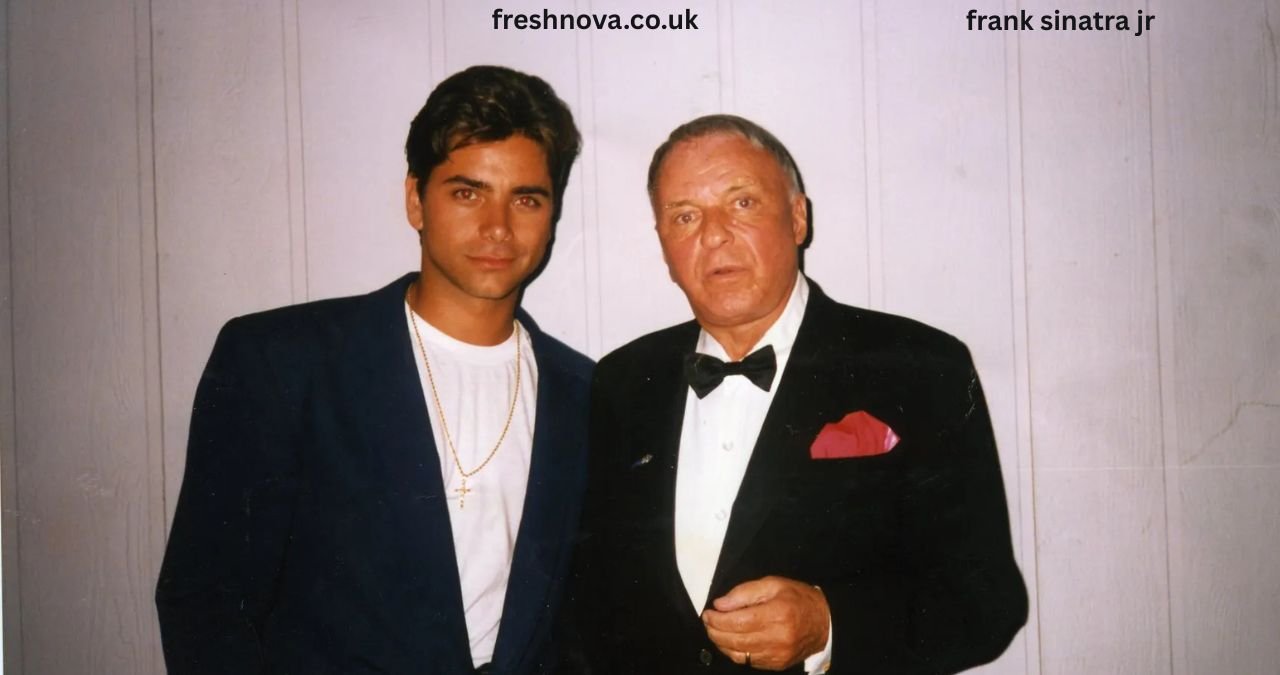
Frank Sinatra Jr. was an American singer, songwriter, and conductor best known as the son of legendary entertainer Frank Sinatra. Although he grew up in the shadow of one of the most recognizable voices in music history, he developed his own career as a performer and spent much of his life preserving and performing his father’s musical repertoire.
Born into a family deeply connected to Hollywood and popular music, Sinatra Jr. experienced both the opportunities and challenges that came with his famous surname. His life included professional performances, a widely publicized kidnapping in his youth, and years of work leading orchestras that celebrated the classic American songbook.
This article explores Frank Sinatra Jr.’s background, musical achievements, family relationships, personal challenges, and legacy. It also explains how his career differed from that of his celebrated father and why his contribution remains relevant to fans of traditional pop and jazz-influenced music.
Who Was Frank Sinatra Jr.?
Frank Sinatra Jr., whose full name was Francis Wayne Sinatra, was born on January 10, 1944, in Jersey City, New Jersey, United States. He was the only son of Frank Sinatra and his first wife, Nancy Barbato Sinatra.
Growing up around music and entertainment, he was exposed to the professional world of singers, musicians, and stage performers from an early age. His father’s extraordinary success meant that the Sinatra name already carried enormous expectations before the younger Sinatra established his own career.
Rather than becoming known exclusively as a recording artist, Sinatra Jr. built a professional life that combined singing, arranging, conducting, and performing with orchestras. His work frequently centered on the standards made famous during the golden age of American popular music.
He died on March 16, 2016, in Daytona Beach, Florida, at the age of 72. His death marked the loss of a performer who had devoted decades to live music and the preservation of his family’s musical heritage.
Early Life and Family Background
Frank Sinatra Jr. was born into a family whose life changed dramatically as his father’s popularity grew. Frank Sinatra Sr. became one of the defining singers of the twentieth century, achieving success in music, radio, film, and live entertainment.
His mother, Nancy Barbato Sinatra, played a central role in the family’s early years. Frank Jr. grew up alongside his two sisters, Nancy Sinatra and Tina Sinatra, both of whom developed careers and public identities of their own.
Living in a well-known entertainment family brought access to influential musicians and performers, but it also meant that the younger Sinatra was rarely viewed independently of his father.
Growing Up as Frank Sinatra’s Son
Being the son of a world-famous singer created unusual circumstances. Frank Sinatra Jr. was connected to an established musical legacy long before he could decide what kind of performer he wanted to become.
His father’s career offered an example of professional discipline, stagecraft, and musical interpretation. At the same time, comparisons between father and son were almost inevitable.
For a young singer, those comparisons presented a challenge: audiences could evaluate his performances against a standard established by one of the most successful vocalists in popular music.
His Education and Interest in Music
Sinatra Jr. developed an interest in music while still young. He became involved in singing and performance and eventually worked with professional bands and orchestras.
His later emphasis on conducting and arranging demonstrated an interest beyond simply reproducing familiar songs. He understood that a successful performance depended on musical timing, orchestral coordination, phrasing, and the relationship between a singer and the musicians supporting him.
Although his family background brought him public attention, his long career required the practical skills and experience expected of a working musician.
Frank Sinatra Jr.’s Music Career
Frank Sinatra Jr. began working professionally as a singer during his teenage years. His career developed through live performances, touring, recordings, and television appearances rather than through a single breakthrough hit.
He initially considered a career as a pianist and conductor while studying music at the University of Southern California. He eventually made his professional debut as a singer with the Elliott Brothers Band.
Working With Big Bands
Big-band music became an important part of Sinatra Jr.’s professional development. He performed with established orchestras, including the Sam Donahue Orchestra, and gained experience in the demanding environment of live musical performance.
Working with a band required more than a recognizable voice. He had to follow arrangements, maintain timing, work with instrumentalists, and adapt performances to different venues and audiences.
These experiences helped him develop the skills he would later use as an orchestra conductor and musical director.
Recording Music and Developing His Style
Sinatra Jr. recorded music during his career, although his recordings never achieved the same widespread commercial success as those of his father.
His musical interests were closely connected to traditional pop, jazz-influenced standards, and big-band arrangements. Rather than pursuing the changing styles that dominated later decades of popular music, he continued working within a tradition built around orchestral accompaniment and carefully delivered vocals.
His 1996 album As I Remember It was a tribute to his father’s musical world and the composers and arrangers associated with the Sinatra sound.
His Work as a Musical Director and Conductor
One of Sinatra Jr.’s most significant professional roles began in 1988, when he joined his father’s touring team as musical director and conductor.
He helped select songs, prepare arrangements, and rehearse the orchestra supporting Frank Sinatra Sr. His work also extended to television productions, including Frank, Liza & Sammy: The Ultimate Event in 1989 and Sinatra 75: The Best Is Yet to Come in 1990.
This work demonstrated that his contribution to music extended beyond his own singing. He was responsible for helping bring complex arrangements to the stage and maintaining the musical quality of performances associated with his father’s name.
The 1963 Kidnapping That Changed His Life
One of the most widely reported events in Frank Sinatra Jr.’s biography was his kidnapping in December 1963, when he was 19 years old.
On December 8, he was performing at Harrah’s Club Lodge in Lake Tahoe, near the California-Nevada border. Kidnappers abducted him from his hotel room and demanded money from his father.
The FBI investigated the case, which attracted national attention because of the Sinatra family’s prominence. The ransom demand was $240,000, and the money was delivered as part of an operation intended to help investigators identify the perpetrators.
Sinatra Jr. was released safely after approximately two days. The investigation ultimately led to the conviction of three men involved in the crime.
Rumors and Public Misunderstandings
The case generated rumors that the kidnapping had been staged for publicity. Those allegations persisted in public discussion for years, but the investigation and resulting convictions established that the crime involved actual kidnappers.
It is important to distinguish sensational speculation from documented evidence when discussing this episode. The kidnapping was a serious criminal event, not simply a dramatic anecdote connected to a famous family.
How the Experience Affected His Public Image
The kidnapping made Sinatra Jr. a major news figure before he had fully established his professional identity. For many people, the incident became one of the first things they associated with him.
Although it brought intense public attention, it did not define the rest of his career. He continued performing, recording music, and developing his professional skills in the decades that followed.
Frank Sinatra Jr. and His Famous Father
The relationship between Frank Sinatra Jr. and Frank Sinatra Sr. was central to both men’s public stories.
Frank Sinatra Sr. was already an international star when his son was growing up. His reputation as a singer, film actor, and commanding live performer created a demanding standard for anyone carrying the same family name.
The younger Sinatra’s career therefore developed in an unusual position. He benefited from the public interest surrounding his family, but he also faced constant comparisons with a singer whose voice and stage presence were deeply established in popular culture.
A Professional Partnership
Their relationship became especially visible when Sinatra Jr. joined his father’s touring operation in the late 1980s.
As musical director, he could contribute in ways that did not depend on matching his father’s voice. He helped shape the musical presentation, coordinated orchestral rehearsals, and supported the arrangements that audiences expected to hear.
This role gave him an important place in the later years of Frank Sinatra Sr.’s performing career.
Preserving the Sinatra Songbook
After his father died in 1998, Sinatra Jr. continued performing songs associated with him. His concert performances often featured familiar standards accompanied by an orchestra, along with stories about his father’s career.
In a 2002 interview, Sinatra Jr. described the opportunity to perform his father’s music as a gift, particularly because it allowed him to sing with a large orchestra and work with classic arrangements.
His post-1998 performances helped introduce the Sinatra repertoire to audiences who had never seen the original singer perform live.
Frank Sinatra Jr.’s Acting and Television Appearances
Although music was the foundation of his career, Sinatra Jr. also appeared in films and television programs.
His screen credits included A Man Called Adam, a 1966 film featuring Sammy Davis Jr. and Louis Armstrong. He also appeared in television series such as The Love Boat, Adam-12, The Red Skelton Hour, and Marcus Welby, M.D.
Later in his career, he made appearances as himself in popular television comedies, including The Sopranos and Family Guy. These roles introduced him to viewers who might not have followed his concert performances.
His acting work was generally a secondary part of his public identity. Unlike some entertainers who move between film, television, and music as equal career priorities, Sinatra Jr. remained most closely associated with singing and orchestral performance.
Frank Sinatra Jr.’s Family, Wife, and Children
Frank Sinatra Jr. was the only son of Frank Sinatra Sr. and Nancy Barbato Sinatra. His sisters were Nancy Sinatra, the singer known for songs such as “These Boots Are Made for Walkin’,” and Tina Sinatra, who worked in entertainment production.
His family connections placed him within a prominent American entertainment dynasty, but each sibling followed a different professional path.
Was Frank Sinatra Jr. Married?
Sinatra Jr. married Cynthia McMurry in 1998. The marriage ended in divorce in 2000.
Details about his relationships should be approached carefully. Public interest in the Sinatra family has sometimes encouraged speculation, but reliable biographical accounts provide a more appropriate basis for describing his personal life.
Did Frank Sinatra Jr. Have Children?
Yes. Public obituaries identify his son, Michael Sinatra, from an earlier relationship.
His son and sisters were among the family members connected to his life and legacy. Beyond well-documented details, it is best to avoid presenting unverified claims about family relationships as established facts.
Frank Sinatra Jr. Compared With Frank Sinatra Sr.
Although their careers overlapped, father and son occupied different positions in American entertainment.
| Category | Frank Sinatra Jr. | Frank Sinatra Sr. |
|---|---|---|
| Primary identity | Singer, conductor, musical director | Singer, actor, major recording artist |
| Musical emphasis | Traditional pop, big-band standards | Traditional pop, swing, jazz-influenced standards |
| Most recognized role | Performing and preserving the Sinatra repertoire | Establishing an internationally influential singing career |
| Orchestra work | Directed and conducted his father’s touring orchestra | Performed with leading orchestras and arrangers |
| Film and television | Guest roles and appearances as himself | Extensive film career and major television appearances |
| Historical legacy | Continued the performance tradition of the Sinatra songbook | Became one of the defining entertainers of the twentieth century |
The comparison illustrates why their achievements should not be measured by identical standards. Frank Sinatra Sr. became a cultural icon through decades of recordings, films, and performances. His son developed a different professional identity through live singing, musical direction, and the interpretation of established standards.
Sinatra Jr.’s work is best understood as a continuation of a musical tradition rather than an attempt to recreate every aspect of his father’s career.
What Was Frank Sinatra Jr.’s Net Worth?
Frank Sinatra Jr.’s exact net worth at the time of his death has not been established through a reliable, publicly verified financial accounting.
Celebrity websites sometimes publish estimates of his wealth, but those figures should not be treated as confirmed facts unless supported by credible financial records or documented reporting.
His professional income came from activities including live performances, music recordings, conducting, and entertainment appearances. However, without verified information about his assets, expenses, royalties, and estate arrangements, assigning a precise dollar amount would be speculative.
For readers researching celebrity finances, it is useful to distinguish between a published estimate and a documented net worth. The two are not necessarily the same.
When Did Frank Sinatra Jr. Die?
Frank Sinatra Jr. died on March 16, 2016, in Daytona Beach, Florida. He was 72 years old and was in Florida for a scheduled concert tour.
His family reported that he died from cardiac arrest. His passing was widely reported by news organizations, which remembered him as a singer and conductor who continued performing his father’s music long after Frank Sinatra Sr.’s death in 1998.
His death ended a career spanning several decades, but recordings, concert memories, and the music he performed remain part of the broader Sinatra legacy.
Why Frank Sinatra Jr. Still Matters to Music Fans
Frank Sinatra Jr.’s importance extends beyond his family connection. He was a working performer who developed experience with orchestras, recording sessions, and live audiences over many years.
His musical directorship also offers an example of how an artist can contribute to a famous musical legacy without occupying the same role as the original star. A singer’s performance depends on more than the voice alone: orchestral arrangements, tempo, rehearsal, phrasing, and presentation all help determine how a song reaches its audience.
By performing traditional standards and preserving familiar arrangements, Sinatra Jr. helped keep a particular era of American popular music alive on the concert stage.
His career also highlights the difficulty of building an independent identity within a famous family. His professional achievements deserve consideration in their own right, even though his father’s influence remained a central part of his public story.
Frequently Asked Questions
1. Who was Frank Sinatra Jr.?
Frank Sinatra Jr. was an American singer, songwriter, conductor, and actor. He was the only son of legendary singer Frank Sinatra Sr. and Nancy Barbato Sinatra. He was especially known for performing classic standards and serving as his father’s musical director.
2. How old was Frank Sinatra Jr. when he died?
He was 72 years old when he died on March 16, 2016. He was born on January 10, 1944, in Jersey City, New Jersey.
3. Was Frank Sinatra Jr. a successful singer?
He maintained a long professional career as a singer and performer, recording music and touring with orchestras. However, he did not achieve the same level of commercial success or cultural recognition as his father.
4. Did Frank Sinatra Jr. conduct his father’s orchestra?
Yes. He joined his father’s touring team as musical director and conductor in 1988. His responsibilities included helping select music, preparing arrangements, and rehearsing and conducting the orchestra.
5. What happened to Frank Sinatra Jr. in 1963?
He was kidnapped from a hotel in Lake Tahoe on December 8, 1963, when he was 19. The kidnappers demanded a $240,000 ransom. He was released safely approximately two days later, and three men were convicted in connection with the crime.
6. Was Frank Sinatra Jr. married?
Yes. He married Cynthia McMurry in 1998. They divorced in 2000.
7. Did Frank Sinatra Jr. have a son?
Yes. Public obituaries identify his son as Michael Sinatra.
8. What was Frank Sinatra Jr.’s most important contribution to music?
One of his most significant contributions was his work as a musical director and conductor for his father, followed by years of performances celebrating the Sinatra songbook. These activities helped maintain public interest in classic American popular music and its orchestral arrangements.
Conclusion
Frank Sinatra Jr. lived a life shaped by extraordinary family fame, personal challenges, and a sustained commitment to music. Although comparisons with Frank Sinatra Sr. followed him throughout his career, he developed valuable experience as a singer, conductor, and musical director.
His work with his father’s orchestra, his recordings, and his later concert performances demonstrated a deep connection to traditional pop and big-band music. The 1963 kidnapping remains a notable episode in his biography, but it represents only one part of a life devoted to entertainment.
Ultimately, Frank Sinatra Jr.’s legacy rests on his role as both a performer in his own right and a custodian of one of America’s best-known musical repertoires.
